
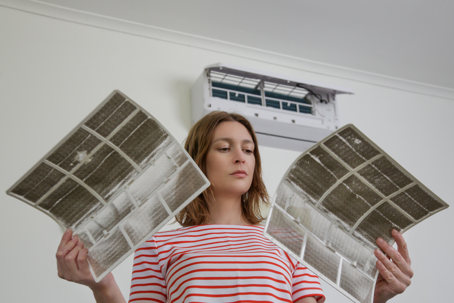
Fall in Stanislaus County brings cooler relief, but it also marks the peak of the Central Valley wildfire season. When heavy smoke blankets Modesto and the surrounding areas, your home should be a safe haven. However, standard HVAC filters are completely unequipped to trap the microscopic, hazardous particles found in wood smoke. To protect your family's respiratory health and maintain pristine indoor air quality, you need the right level of air filtration.
Choosing the correct filter can be confusing with so many ratings and sizes available. Let's look at the top five things you need to know to select the best defense for your home before the smoke arrives.
1. Ditch the Standard Fiberglass Filters
Standard flat fiberglass filters usually have a MERV rating of 1 to 4. While these are fine for catching large dust bunnies and protecting your HVAC equipment from major debris, they do absolutely nothing to stop wildfire smoke. Smoke consists of fine particulate matter that easily passes through these low-grade filters and enters your lungs.
2. Aim for the MERV 13 Sweet Spot
Air filters are rated by the Minimum Efficiency Reporting Value (MERV), which ranges from 1 to 16 for residential systems. For noticeable protection during wildfire season, you want to upgrade to a pleated filter rated between MERV 11 and MERV 13. A MERV 13 filter can trap a high percentage of airborne smoke particles, viruses, and bacteria.
3. Check Your System's Airflow Limits
It might seem tempting to buy the highest MERV rating available, but high-efficiency filters create more resistance against moving air. If your HVAC system wasn't designed to handle a restrictive filter, it can cause the blower motor to overwork. This leads to higher energy bills or a sudden system breakdown right when you need it most.
4. Change Filters More Frequently in Fall
During an active wildfire event, filters clog up much faster than they do during the rest of the year. A filter tasked with scrubbing heavy smoke from the air can become fully loaded in just a few weeks. Checking your filter every 15 to 30 days during periods of heavy smoke helps keep your air clean and your system running safely.
5. Consider a Whole-Home Air Purifier
If someone in your family suffers from asthma, allergies, or respiratory vulnerabilities, upgrading the standard filter might not be enough. In-duct air purifiers work alongside your heating and cooling system to actively sanitize the air. These systems use advanced technology to neutralize smoke odors and microscopic particles throughout the entire house.
Secure Your Indoor Comfort Today
Do not wait until the sky turns orange to think about your home's air quality. At Comfort Experts Heating & Air Conditioning, we are personally invested in keeping our neighbors safe and comfortable through every season. Our licensed, local technicians can evaluate your system, recommend the perfect filter upgrade, or install advanced whole-home air purification systems to give you ultimate peace of mind. Give us a call at (209) 222-2779 to ensure your home is ready to breathe easy this fall.